
 English
 Español
 Português
 Français
 اللغة العربية
 Русский язык

project name: tube & coupler scaffolding access supply for refinery turnaround maintenance
product : en 39 scaffold tubes (48.3 mm od, 3.2/4.0 mm wall) with en 74 drop-forged right-angle, swivel, and double couplers
size & standard: tube od 48.3 mm, wall thickness 3.2 mm or 4.0 mm, steel grade s235jrh/s355joh, hot-dip galvanized to min. 55 μm; right-angle couplers tested to en 74 class b, swivel couplers to en 74 class a; drop-forged bodies with grade 8.8 bolts; load-bearing joints rated for industrial working platforms
refinery and petrochemical plant turnarounds compress inspection, welding, and repair work into narrow shutdown windows. piping runs are dense, vessels and exchangers sit millimeters apart, and access routes shift as maintenance scope evolves. standard modular scaffolding cannot wrap around curved pipe racks, irregular vessel profiles, or confined corridors without heavy customization or demolition of existing modules. contractors need an access system that is assembled on-site, adjusted in place, and dismantled quickly—without compromising load capacity at critical joints.
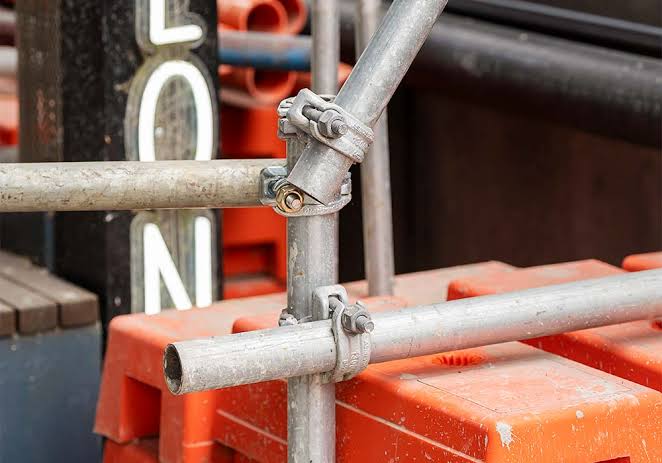
the project deployed a tube-and-coupler system in which 48.3 mm galvanized scaffold tubes formed the structural skeleton, and couplers defined every connection geometry. the system’s value came from three coupler types working as a coordinated set:
drop-forged right-angle couplers (en 74 class b) anchored vertical standards to horizontal ledgers at load-bearing nodes. forged steel bodies maintained clamping integrity under vibration and static load, with failure resistance above 31 kn—significantly higher than stamped alternatives.
drop-forged swivel couplers (en 74 class a) connected tubes at variable angles, allowing the frame to bypass curved pipes, skewed structural members, and irregular machinery outlines without cutting or welding tubes on-site.
double couplers reinforced overlapping tube connections at cross-over points, improving frame stiffness at elevated inspection platforms and narrow walkways.
a representative configuration for a congested refinery unit used right-angle couplers for primary load paths, swivel couplers for geometry adaptation, and double couplers at splice zones. this hybrid approach allowed the scaffold footprint to be modified incrementally as maintenance crews opened new work fronts—without tearing down the entire structure.
every tube and coupler batch was verified before shipment. tube inspection covered outer diameter tolerance (±0.5 mm), wall thickness, straightness, and hot-dip galvanized coating thickness (≥55 μm mean). coupler inspection included visual examination for forging defects, thread engagement of t-bolts, and batch traceability to en 74 load class. drop-forged couplers were tested for slip resistance at primary structural connections, with a target slip load of 9.1 kn for double couplers in load-bearing applications. all components were packed in export-grade bundles with anti-rust protection, and the shipment carried material certificates, third-party inspection reports, and packing lists aligned to the client’s site delivery sequence.
tube-and-coupler scaffolding remains the most adaptable access solution for industrial maintenance because its geometry is defined at the coupler, not at the factory. future supply will focus on coupler class matching—pairing en 74 class b forged couplers for primary structure with lighter fittings only where load calculations permit—and on pre-packing tube lengths by work front to reduce on-site cutting and sorting. as refinery turnaround intervals shorten and plant layouts grow more congested, the tube-and-coupler system’s on-site adjustability will continue to outweigh the assembly-speed advantages of modular systems in complex maintenance environments.